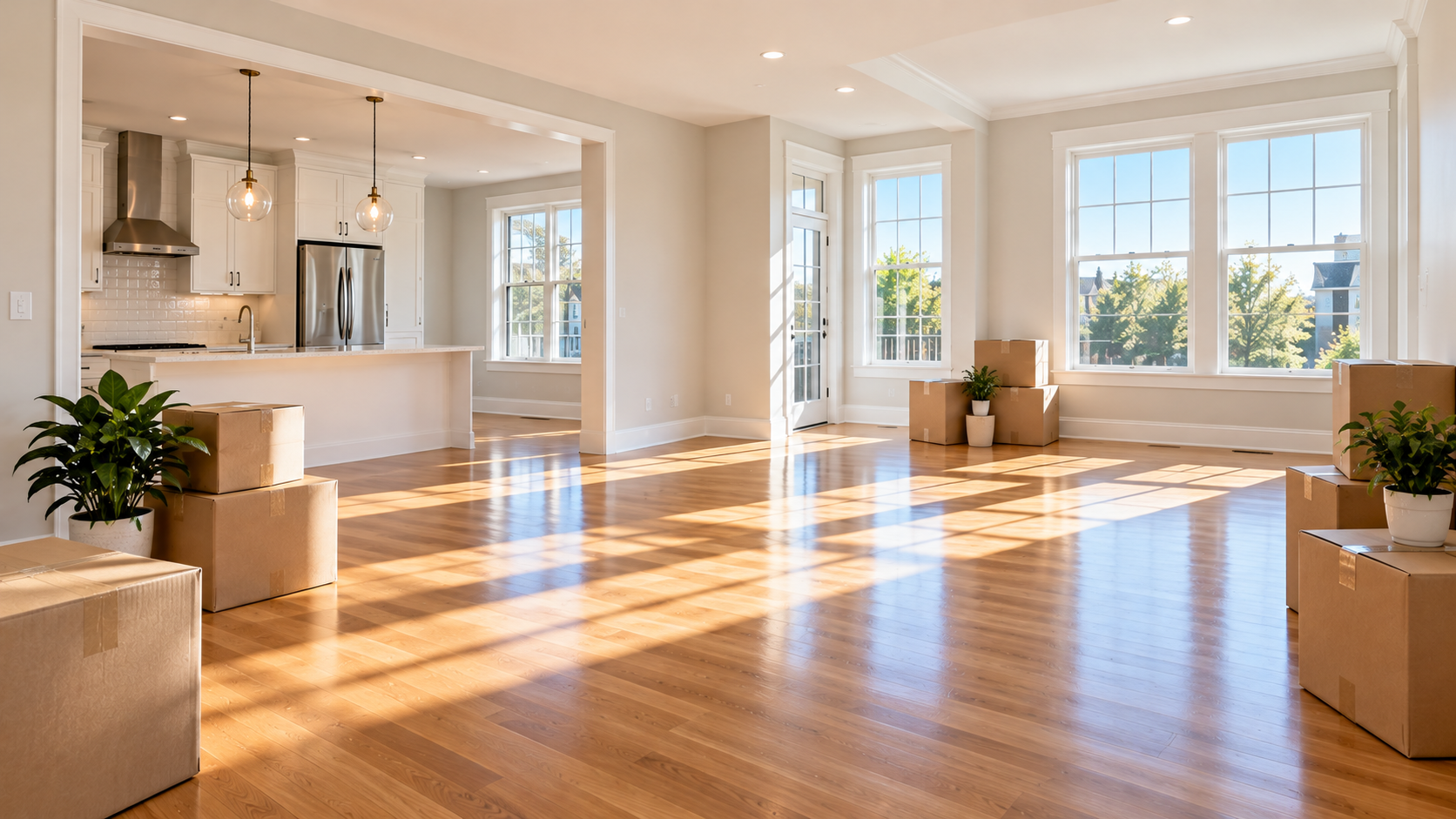
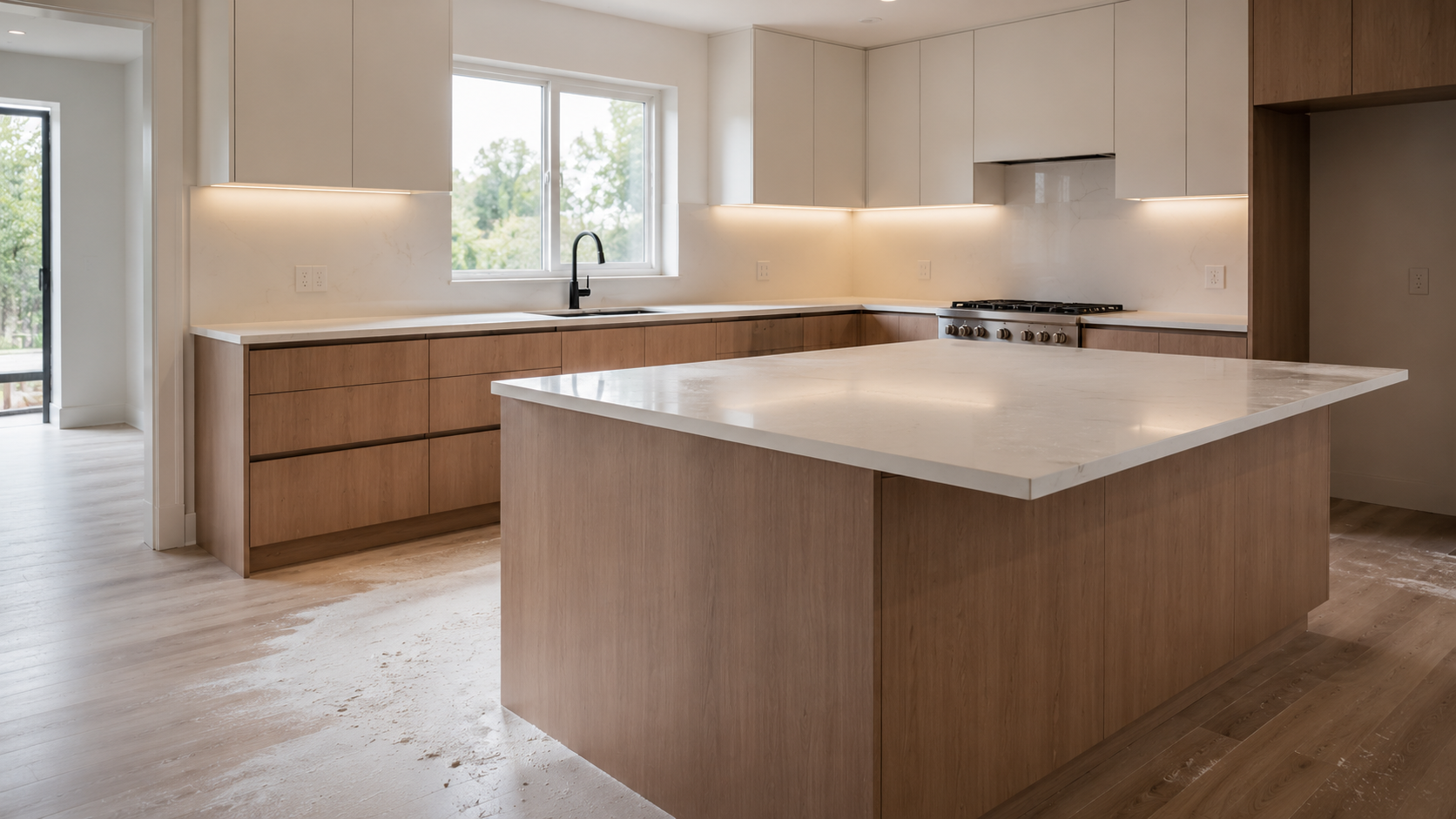
The renovation is finished. The permits are closed, the crew has packed up, and the new kitchen looks exactly like the rendering. Then you walk in the next morning and find a fine gray film on every surface in the house — including rooms the contractors never entered.
This surprises almost everyone. Construction dust doesn’t stay where the construction was. It travels through HVAC systems, settles behind doors, and works its way into places you won’t notice for weeks. Post-construction cleaning is a distinct service for a reason, and understanding it will save you both money and frustration.
Why Construction Dust Is Different
Regular household dust is mostly fabric fibers, skin cells, and outdoor soil. Construction dust is something else entirely: pulverized drywall, sawdust, joint compound, concrete, grout haze, and sanded paint particles.
Three things make it a genuine problem:
It’s abrasive. Drywall and concrete dust are hard, angular particles. Wipe them across a new hardwood floor or a fresh quartz countertop with a dry cloth and you’ll leave fine scratches. This is the single most common way homeowners damage their own new finishes.
It’s alkaline and it bonds. Joint compound and cement dust react with moisture. Wipe with a damp cloth and you can turn a dusting problem into a thin, cementitious smear that’s far harder to remove.
It’s extremely fine and it keeps coming back. Particles small enough to stay airborne for hours will settle again after you clean. This is why post-construction cleaning is properly done in stages, not in one pass.
Important for older homes: If your Massachusetts home was built before 1978 — which describes an enormous share of housing stock on the North Shore and in Greater Boston — lead paint is a serious consideration. Any disturbance of pre-1978 painted surfaces should be handled by a licensed lead-safe contractor under Massachusetts regulations, not a general cleaning service. Ask your contractor directly whether lead-safe work practices were used. The same caution applies to any suspected asbestos in older insulation, floor tile, or pipe wrap.
The Three Phases of Post-Construction Cleaning
Professional post-construction work is typically structured in phases. Knowing the phases helps you understand quotes and schedule properly.
Phase 1: Rough Clean
This happens while work is still in progress, usually after framing and drywall but before finishes. It’s debris removal: scrap material, packaging, nails, offcuts. Most general contractors handle this themselves, and it’s often written into the construction contract.
Phase 2: Light or Interim Clean
After major installation is done but before final touches. Surfaces get an initial pass so trades can work in a cleaner environment and so problems become visible.
Phase 3: Final Detail Clean
This is what most homeowners are actually shopping for. It’s the pass that makes the space livable:
- Ceilings down. Always top to bottom, because everything falls.
- HEPA vacuuming of every surface before any wet cleaning. This is the step that separates a professional job from a damaging one.
- Light fixtures, ceiling fans, and vent covers, inside and out
- Windows: glass, frames, tracks, and removal of manufacturer stickers and adhesive residue
- Paint overspray and caulk removal from glass, hardware, and fixtures
- Grout haze removal from new tile — this requires the right product and the right timing
- Cabinet interiors, which collect a shocking amount of dust even when doors were closed
- Baseboards, trim, door frames, and door tops
- Outlet and switch plates, which always have compound residue on the edges
- Appliance interiors and exteriors, including protective film removal
- HVAC registers and returns
- Floors: vacuum first, then the correct wet method for the specific material
A fourth phase — a touch-up clean a week or two later — is worth considering on larger projects, because residual dust in the HVAC system will resettle. Running your system with a fresh filter and then re-cleaning is far more effective than trying to catch everything on day one.
What Your Contractor’s “Clean-Up” Actually Covers
This is where expectations break down. Most construction contracts include a “broom clean” or “job site clean-up” clause. That generally means:
- Debris hauled away
- Floors swept
- Tools and materials removed
It does not typically mean detail cleaning, window washing, grout haze removal, cabinet interiors, or anything approaching move-in condition. Read your contract carefully. If the language is vague, ask before the crew leaves — it’s a much easier conversation then.
Many general contractors in the Greater Boston area simply subcontract the final detail clean, and some will let you arrange it yourself and credit the line item. Either way, someone is paying for it. Know which.
What It Costs in Massachusetts
Post-construction cleaning is priced higher than standard cleaning, and the reason is straightforward: it takes far longer, requires specialized equipment like HEPA vacuums, and consumes materials aggressively.
Pricing generally depends on:
- Square footage of the affected area
- Scope of the renovation — a single bathroom versus a full gut
- Whether the space is occupied or empty
- Number of windows, which are disproportionately time-consuming
- Type of finishes — natural stone, unsealed grout, and specialty hardwood all require specific handling
- Access — third-floor units without elevators change the equation
Rather than a per-square-foot number that won’t fit your project, most reputable companies will walk the space or review photos and quote directly. Be skeptical of anyone who quotes a gut renovation over the phone without seeing it.
Timing: When to Schedule
Schedule the final detail clean after every trade is finished — including the punch list. Nothing is more wasteful than paying for a detail clean and then having a painter return for touch-ups.
Practical sequence:
- All trades complete, including punch list items
- Final walkthrough with your contractor
- Detail clean
- Move in furniture
- Optional touch-up clean 1–2 weeks later
If you’re moving into a newly renovated home, combining the post-construction clean with a move-in clean is usually more efficient than booking them separately.
Questions to Ask Before You Hire
- Are you insured and bonded? (Ask for the certificate. In a home full of new finishes, this matters more than usual.)
- Do you use HEPA filtration?
- Have you handled projects of this scope before?
- What’s your process for natural stone, hardwood, and new grout?
- Is window interior included, or quoted separately?
- What happens if something is damaged?
For Contractors and Builders
If you’re a general contractor working in Essex County or Greater Boston, having a reliable cleaning partner is a genuine competitive advantage. The final clean is the last impression the homeowner has of your project — a beautiful renovation delivered dusty reads as unfinished work, no matter how good the craftsmanship.
We work with contractors on a recurring basis with consistent crews and scheduling that fits construction timelines.
Working With GS Family Cleaning
Post-construction cleaning is one of our specialties. We’ve been serving Peabody, Salem, Danvers, Beverly, Lynn, Marblehead, and the wider North Shore since 2016, we’re insured and bonded, and we bring all our own equipment and products — including eco-friendly and fragrance-free options for families moving back into a freshly renovated home.
Renovation wrapping up?
Send us photos of the space and we’ll get you an estimate quickly. Call (857) 233-1459 or request a quote online.